
Sectors / Manufacturing / Glen Dimplex – Assembly Line Case Study
Glen Dimplex: Eliminating €3,845 in downtime costs
A stores employee who could see the assembly line problems daily used Kanban and 5S to eliminate stock-outs, reduce downtime, and transform communication between Stores and Planning.
Manufacturing / Heating & Electrical
Lean Practitioner
Ireland
€3,845
Labour cost lost to downtime in 3 months
160 hrs
Lost to downtime (before improvement)
Zero
Stock-outs after Kanban implementation

160 hours of downtime and €3,845 in labour costs — in just 3 months
An employee who had worked in Glen Dimplex’s metal stores for over 6 years was the first person to work in that area — and could clearly see what was happening on the assembly line daily. He knew that production runs were often not completed, and believed Lean tools would help.
The problems were systemic:
- Line stoppages due to stock-outs of painted parts
- High downtime costs — at €24 per hour, 160 hours of downtime cost €3,845 in labour alone over 3 months
- Excessive firefighting and repeat communications between departments
- No reliable checks done prior to production start
- No kitting or Kanban system in place for the assembly line
- Parts arriving in unsuitable batch sizes and containers
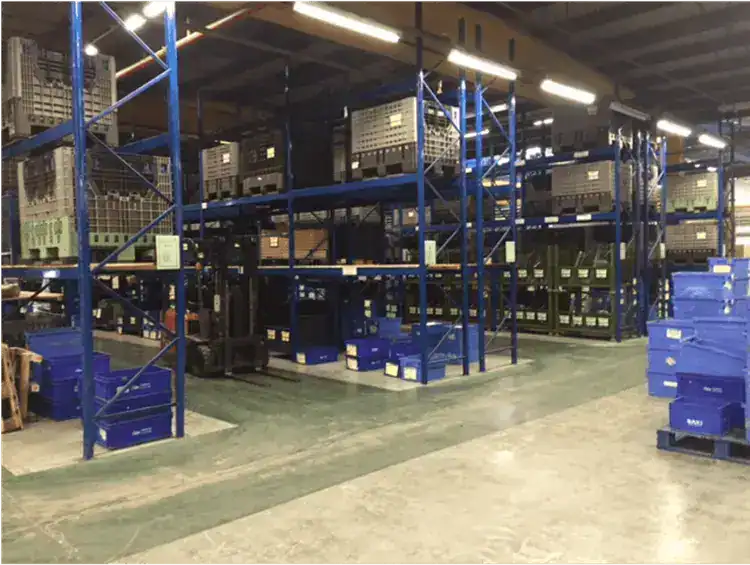
From stock-outs and firefighting to zero downtime
Key Challenges
The team needed to:
- Eliminate stock-outs of painted parts that caused line stoppages
- Recover the 160 hours of lost downtime
- Introduce pre-production checks to prevent firefighting
- Implement a kitting and Kanban system for the assembly line
- Improve communication between Stores and Planning
- Address batch sizes and container suitability
The Lean Solution
Using the 8-Step methodology with a brainstorming event:
- Changed the layout of the metal stores to improve flow
- Batch-sized the metal parts appropriately for the assembly line
- Put parts in more suitable containers
- Updated all labels for clarity and accuracy
- Introduced a Kanban system for production runs over 300 units
- Established better communication between Stores and Planning departments
“He could clearly see what was happening on the assembly line on a daily basis. He knew that Lean tools would help to run things more efficiently.”
— Glen Dimplex Ireland
8-Step Problem-Solving Process
The employee’s 6 years of daily observation gave him unique insight into the assembly line problems — the 8-Step methodology gave him the structure to solve them systematically.
Problem
Line stoppages from painted parts stock-outs. 160 hours downtime. €3,845 labour cost in 3 months. No Kanban. No pre-production checks.
Current State
Measured downtime at €24/hour. 160 hours lost. Parts in wrong containers and batch sizes. No system for ensuring parts availability.
Target
Zero stock-outs. Eliminate unplanned downtime. Introduce Kanban and kitting system. Improve Stores-Planning communication.
Root Cause
Brainstorming event: no kitting system, unsuitable containers, poor labelling, no pre-checks, inadequate Stores-Planning communication.
Countermeasures
Store layout changed. Parts batch-sized. Better containers. Labels updated. Kanban for runs >300. Stores-Planning communication improved.
Implementation
Changes implemented. Two successful production runs completed with no stock-outs or downtime.
Evaluation
2 successful runs with zero stock-outs and zero downtime. Company considering rollout to other areas of the factory.
Standardisation
New store layout and Kanban system established. Rollout to other factory areas planned.
INSERT PHOTO
Zero stock-outs, zero downtime
The results were immediate and definitive:
- Two successful production runs. Since implementing the changes, the team completed two full runs with no stock-outs and no downtime — a stark contrast to the previous 160 hours of losses.
- Kanban system operational. The kitting system for runs over 300 units ensures painted parts are available at the line when needed.
- Better communication. Stores and Planning now have a shared view of what’s needed and when — reducing firefighting and repeat communications.
- Rollout planned. The success on this line has prompted the company to consider rolling the approach out to other areas of the factory.
Learnings
- The person closest to the problem (6 years in metal stores) had the clearest view of what was going wrong — Lean methodology gave him the tools to fix it.
- Kanban is a straightforward system to implement but has a transformative impact on parts availability and line continuity.
- Changing the physical layout (stores organisation, containers, labels) created the foundation for the process improvements to work.
- Having seen Lean tools work in other areas of the factory gave this employee confidence that they would work here too.
The person who sees the problem every day is the person to solve it
This case study exemplifies the core Lean principle: the people closest to the work are best placed to improve it. Six years of daily observation meant this employee knew exactly what was causing assembly line stoppages — he just needed the structured methodology to implement the solution. The result: zero stock-outs, zero downtime, and a model for rollout across the factory.
LeanTeams has worked with Glen Dimplex on multiple improvement projects. You may also be interested in: Changeover Time and Design Projects.
Lean tools applied in this case study
Get results like Glen Dimplex
Our Lean training programmes help businesses across Ireland reduce waste, improve processes, and build a culture of continuous improvement.
More Case Studies
Explore our manufacturing case studies.