
Sectors / Manufacturing / Barclay Chemicals — Waste Elimination
Lean Waste Elimination: Barclay Chemicals saves €40,000/year on label scrappage
A Lean Practitioner project at Barclay Chemicals used Kaizen and 8-Step Problem Solving to tackle €310,000 in label scrappage costs across their chemical manufacturing operation. By replacing a cumbersome spreadsheet with a SharePoint database, the team cut annual scrappage by approximately €40,000 and reduced label completion time from 45 days toward a 30-day target.
Manufacturing / Crop Protection
Lean Practitioner
Dublin, Ireland
€40k/yr
Annual label scrappage cost reduction
45 → 30
Day target for label completion time (35% reduction)
€310k
Total scrappage cost over 3 years (before Lean)

€310,000 in label scrappage waste: how a cumbersome spreadsheet cost a chemical manufacturer
Barclay Chemicals is a family-owned Irish crop protection manufacturer with over 30 years’ experience, employing 85+ people from their Dublin base. The Label Status Table (LST) is a critical part of the labels process across Commercial, Registration and Supply Chain departments.
An employee identified that the LST had become too big and cumbersome to manage — and the consequences were expensive:
- Label scrappage had cost the company an estimated €310,000 over a 3-year period
- Labels took an average of 45 days to complete — far longer than necessary
- The company was scrapping 14% of total labels ordered on average per year
- Approximately 3.33% of total labels were scrapped due to administration errors and mistakes on the label itself — representing 29% of total scrap
- The system was open to error and bad data entry — duplicate entries, information on wrong lines, no change tracking
- Chemical names were not uniform across the system, making it labour-intensive to manage
- There was no notification process when labels moved between stages
The objectives were clear: reduce label completion time from 45 days to under 30 (a 35% reduction), and reduce avoidable administration scrappage from 3.33% to 2%.
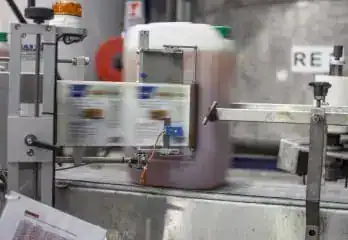
Lean waste elimination: from spreadsheet chaos to automated label tracking
Key Challenges
The cross-departmental team needed to:
- Reduce label completion time from 45 days to under 30 days
- Reduce admin-error scrappage from 3.33% to 2% of total labels ordered
- Replace the cumbersome LST spreadsheet with a more manageable database
- Eliminate duplicate entries, missing information and bad data entry
- Introduce change tracking and automated notifications
- Standardise chemical naming across all departments
- Make the system user-friendly for Commercial, Registration and Supply Chain
The Lean Solution
Using the 8-Step Problem-Solving Process with a Kaizen event and cross-departmental collaboration:
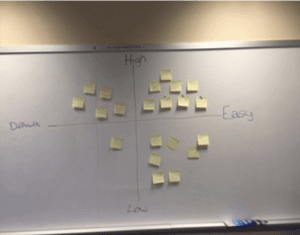
- Ran a Kaizen event that generated 33 issues in just 5 minutes — demonstrating the scale of frustration with the existing system
- Plotted all 33 issues on an Impact/Ease Chart to prioritise countermeasures
- Identified root causes: duplicate entries, missing fields, no change tracking, no notifications, non-uniform chemical names, unnecessary data
- Designed a new SharePoint-based label tracker and dashboard with agreed fields and layout
- All team members from different departments jointly decided the database structure — ensuring it worked for everyone
- Built automated email notifications when labels are assigned to the next person in the workflow
- Established regular team meetings to review label progress and maintain the system
“The new LST is a lot easier to use than the old spreadsheet. There is much more visibility and it is a lot easier to follow the progress of the labels. It is also great to be able to assign a label to the next person in the workflow with an automatic email. It saves so much time.”
— Barclay Chemicals team member
8-Step Problem-Solving Process
The Kaizen event was remarkably productive — 33 issues surfaced in 5 minutes through silent sharing. This volume demonstrated that the frustration with the existing system was widespread, deeply felt, and well understood by the team.
Problem
€310k label scrappage in 3 years. 45-day completion time. 14% annual scrap rate. 3.33% from admin errors alone. Cumbersome, error-prone spreadsheet.
Current State
Label Status Table too large to manage. Duplicate entries, missing info, no change tracking. Chemical names not uniform. No workflow notifications.
Target
Label completion under 30 days (35% reduction). Admin scrappage from 3.33% to 2%. New database replacing the spreadsheet.
Root Cause
Kaizen event: 33 issues in 5 minutes. Duplicates, wrong-line data, no tracking, no notifications, non-uniform naming, unnecessary fields.
Countermeasures
SharePoint database with agreed layout. Automated notifications. Change tracking. Standardised fields. Regular team reviews.
Implementation
New label tracker and dashboard deployed. All departments contributed to field design. Automated email workflow activated.
Evaluation
Management estimated €40,000 per year reduction in label scrappage costs. System easier to use with better visibility and progress tracking.
Standardisation
Regular team meetings established. Dashboard provides live visibility. Automated workflow ensures labels move through the process without manual chasing.
Lean waste elimination results: €40,000 annual saving in chemical manufacturing
The project delivered both measurable financial savings and a fundamentally better working system:
- €40,000 per year reduction in label scrappage costs. Management’s estimate of the annual saving from reduced administration errors and faster label completion — a direct bottom-line impact.
- Label tracker and dashboard deployed. The new SharePoint database replaced the cumbersome spreadsheet — with fields and layout jointly agreed by all departments who use it.
- Automated workflow notifications. Labels are now automatically assigned to the next person in the process with an email alert — eliminating the manual chasing and information lag that caused delays.
- Better visibility. The dashboard provides a real-time view of where every label sits in the process — progress is visible to everyone, not buried in a spreadsheet.
- Cross-departmental ownership. Because all team members from Commercial, Registration and Supply Chain jointly designed the system, adoption was immediate — everyone understood and valued what had been built.
Learnings
- User input from every department was critical — fields that one team thought were unnecessary turned out to be crucial for someone else’s role. Cross-departmental design prevents this blindspot.
- Regular meetings with all team members, with minutes and agreed actions, kept the project on track and ensured alignment.
- Everyone brought something different — different departments use the system for different reasons, and the Kaizen format gave each perspective equal weight.
- Testing the system revealed many adjustments needed — fields that worked in theory needed re-arranging once people actually used them. Iteration is essential.
- Completing the project alongside daily work was challenging — management support and realistic timeframes matter.
- 33 issues in 5 minutes from one Kaizen event demonstrates the power of silent sharing — the problems were well-known but had never been systematically captured.
Lean waste elimination in chemical manufacturing: fixing the system, not the symptoms
Label scrappage is a hidden cost in chemical manufacturing — at €310,000 over 3 years, it was significant at Barclay Chemicals. But the root cause wasn’t the labels themselves — it was the system used to manage them. A cumbersome spreadsheet with duplicate entries, missing information and no workflow tracking was generating avoidable errors that translated directly into scrapped labels and wasted money.
The fix — a well-designed SharePoint database with automated notifications and a dashboard — cost far less than the €40,000 per year it now saves. And because the team designed it together, it works for everyone.
LeanTeams has worked with Barclay Chemicals since 2016. You may also be interested in: Preventive Maintenance (digital PM tracking) and Continuous Improvement (specifications library — 50% reduction). All our case studies are available on our sectors page.
Tools and approaches used to eliminate label scrappage waste
Get results like Barclay Chemicals
Our Lean training programmes help businesses across Ireland reduce waste, improve processes, and build a culture of continuous improvement.
More Case Studies
Lean Waste Elimination for Chemical Manufacturing in Ireland
This case study demonstrates how 8-Step Problem Solving and Kaizen brainstorming can identify and eliminate hidden waste in manufacturing administration processes. Label scrappage is a significant cost in chemical manufacturing — and at Barclay Chemicals, the root cause was a data management system, not the labels themselves.
LeanTeams provides practical Lean Practitioner training for manufacturers across Ireland. This is one of three Lean improvement projects at Barclay Chemicals — see also Preventive Maintenance (digital PM tracking) and Continuous Improvement (specifications library — 50% work reduction).
Explore our manufacturing case studies, pharmaceutical case studies, or learn about Enterprise Ireland LeanPlus and Lean Essentials training programmes.