
Sectors / Manufacturing / Barclay Chemicals – Preventive Maintenance Case Study
Barclay Chemicals: From paper files to digital PM tracking
An employee built a SharePoint-based preventive maintenance system that replaced paper records, freed up 5.5 hours of admin per maintenance cycle, and ensured all equipment is maintained as required.
Manufacturing / Crop Protection
Lean Practitioner
Dublin, Ireland
5.5 hrs
Admin time freed per maintenance cycle
100%
Equipment now maintained on schedule
Digital
SharePoint tracking replaced paper filing

5.5 hours of admin before any maintenance work even starts
Barclay Chemicals is a family-owned Irish company dedicated to the supply of crop protection products for over 30 years. From their Dublin base, they deliver registration, manufacturing and distribution of herbicides and fungicides throughout Europe, employing over 85 people.
An employee in the maintenance team identified that there was no tracking system for preventive maintenance tasks. The consequences were significant:
- 5.5 hours spent on administration before any actual maintenance work was carried out
- No visibility on which machines were due for maintenance or what had been completed
- Paper-based recording and filing — reports had to be physically stored and retrieved
- Time wasted organising workloads as team members were transferred between admin, maintenance and project work
- No equipment history available for planning or auditing purposes
- Risk of equipment being overlooked for maintenance, leading to unplanned breakdowns
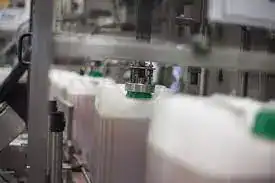
From paper chaos to a digital system everyone can access
Key Challenges
The maintenance team needed to:
- Create a tracking system to record PM task completion and due dates
- Build a filing system for service reports and PM reports
- Enable data entry from any location (not just the maintenance office)
- Manage tasks by area showing detailed standards, checks and results
- Design reports on due and overdue tasks
- Free up the 5.5 hours of admin time for actual maintenance work
The Lean Solution
The team used the 8-Step methodology with a brainstorming session:
- Silent brainstorming session surfaced ideas from IT, maintenance and operations perspectives
- Impact/Ease chart prioritised the countermeasures
- Built a SharePoint-based PM tracking system with task management, scheduling and reporting
- Created a digital reports library replacing paper filing — accessible from any location
- Implemented weekly team meetings to review PM status and train users
- Established a SharePoint Lab Administrator role to audit the system
- Linked equipment history, manuals library and P&ID tag numbers into the system
“The 5.5 hours spent on admin before any maintenance is carried out could be greatly reduced. This would free up time to carry out more maintenance which, in turn, would reduce the number of breakdowns.”
— Barclay Chemicals maintenance team
8-Step Problem-Solving Process
The brainstorming session brought together IT systems expertise, practical maintenance knowledge, organisational skills and a willingness to question current practices — exactly the mix needed for a digital transformation project.
Problem
No PM tracking system. 5.5 hours of admin before any maintenance starts. Paper-based filing. No equipment visibility.
Current State
Mapped the full PM workflow from task identification to completion and filing. Quantified admin overhead at 5.5 hours per cycle.
Target
Digital tracking system. Tasks managed by area with standards and results. Reports on due/overdue tasks. Access from any location.
Root Cause
Brainstorming session: no digital system, paper-based recording, no centralised task management, no equipment history.
Countermeasures
SharePoint PM system built. Digital reports library. Weekly team meetings. Administrator role established for auditing.
Implementation
System deployed with user training. Weekly meetings established. Tasks input into maintenance schedule. Reports automated.
Evaluation
All machines now maintained on schedule. Admin time significantly reduced. System easy to navigate and audit.
Standardisation
Users taking ownership — adding manuals, P&ID tags, spare parts. System continuously improving. Lab Administrator auditing regularly.
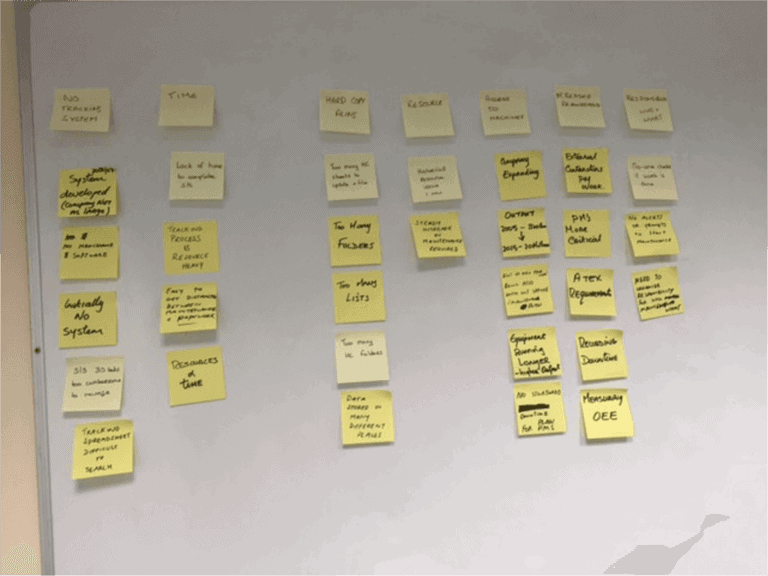
A system that improves itself
The project delivered both immediate efficiency gains and a platform for continuous improvement:
- All machines now maintained as required. The tracking system ensures nothing is overlooked — due and overdue tasks are visible to everyone.
- Labour redeployment. The 5.5 hours of admin time freed per cycle can now be spent on actual maintenance work — directly reducing breakdown risk.
- Digital reports library. Service reports and PM records are now accessible from any location, searchable, and permanently stored — replacing paper filing.
- User-driven improvement. Once users were involved from the beginning, they took ownership and kept improving the system — adding manuals, P&ID tag numbers, and planning to incorporate spare parts tracking.
- Weekly team meetings. Regular reviews keep the system current and provide a forum for identifying new improvement opportunities.
Learnings
- User input from the beginning is critical — the finished system must be suitable for all who use it, not just the designer.
- Communication was not clear initially — different team members had different mental models of how the system should look. Shared terminology matters.
- Regular meetings with all team members ensured alignment — keeping minutes with agreed actions was essential.
- Everyone brought something different: IT expertise, ideas, practical experience, organisational skills, and a willingness to question current practice.
- Things had to be tried more than once — setting up the library and naming conventions took iteration.
- Completing the project alongside daily responsibilities was challenging — management support is crucial.
- Once users are involved from the start, they take ownership and keep improving — the system evolves beyond the original scope.
Ownership drives continuous improvement
The most significant outcome wasn’t just the system itself — it was that users took ownership of it and continued to improve it beyond the original project scope. That’s the hallmark of a successful Lean project: it doesn’t just solve the immediate problem, it creates the conditions for continuous improvement. The manuals library, P&ID tags and spare parts tracking were all added by users, not consultants.
LeanTeams has worked with Barclay Chemicals since 2016. You may also be interested in: Case Study 2 – Continuous Improvement. All our case studies are available here.
Lean tools applied in this case study
Get results like Barclay Chemicals
Our Lean training programmes help businesses across Ireland reduce waste, improve processes, and build a culture of continuous improvement.
More Case Studies
Explore our manufacturing case studies or view our training programmes.