
Sectors / Manufacturing / Barclay Chemicals – Continuous Improvement Case Study
Barclay Chemicals: 50% reduction in specification handling
An employee redesigned the specifications library on SharePoint — reducing work by 50%, eliminating data duplication, and removing the risk of incorrect specifications reaching customers.
Manufacturing / Crop Protection
Lean Practitioner
Dublin, Ireland
50%
Reduction in specification handling work
Zero
Data duplication after redesign
Direct
Supply Chain and Registration access to specs

Time wasted searching for specifications, risk of sending the wrong one
An employee at Barclay Chemicals identified two related problems in how the company managed product specifications:
- Time wasted compiling and searching for specifications on the existing SharePoint database — the structure made it difficult to find what was needed
- Risk of error — the possibility that an incorrect specification could be sent to a customer, with serious quality and compliance implications for a crop protection manufacturer
- Multiple departments (Laboratory, Registration, Supply Chain) all needed access to specifications but had no shared, standardised system
- No clear responsibilities defined for who maintained and updated specifications
- No audit trail or regular review process
The target was to create a single, well-organised specifications library that all departments could access directly — with clear responsibilities, standardised processes, and regular auditing.
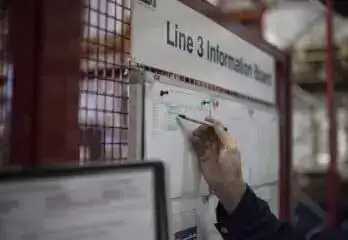
From a messy database to a clean, audited library
Key Challenges
The team needed to:
- Redesign the SharePoint specifications library for easy navigation
- Ensure Supply Chain and Registration have direct access
- Eliminate the risk of incorrect specifications being sent to customers
- Define clear responsibilities for maintenance and updates
- Standardise and document the specification management process
- Establish regular auditing to keep the library accurate
The Lean Solution
Using the 8-Step methodology with a Kaizen event:
- Created a new specifications library in SharePoint with clearly defined categories
- Gave Supply Chain and Registration departments direct access to the database
- Enabled direct emailing of specifications from the SharePoint site
- Built a request box linked to recipients’ Outlook for new specification requests
- Defined all responsibilities and communicated them to stakeholders
- Standardised the process in comprehensive work instructions
- Appointed a SharePoint Lab Administrator to audit the library regularly
“Our Department is very pleased with the new Specifications Library. This is a massive improvement from where we were.”
— Barclay Chemicals team
8-Step Problem-Solving Process
The Kaizen event brought together Laboratory, Registration and Supply Chain perspectives — revealing that each department had a different understanding of how specifications should be managed.
Problem
Time wasted searching for specifications. Risk of incorrect specs reaching customers. No standardised process or clear responsibilities.
Current State
Mapped how specifications were stored, accessed and shared. Identified duplication, poor categorisation and access barriers.
Target
Single, well-organised library. Direct department access. Zero risk of incorrect specifications. Clear ownership and auditing.
Root Cause
Kaizen event: poor SharePoint structure, no defined responsibilities, no standardised process, no audit discipline.
Countermeasures
Redesigned library. Direct access granted. Request box linked to Outlook. Work instructions written. Administrator appointed.
Implementation
New library deployed. Users trained. Responsibilities communicated. Work instructions issued. Audit schedule established.
Evaluation
Work reduced by 50%. Zero data duplication. Direct access working. Specifications emailable from site. Request turnaround tracked.
Standardisation
Work instructions in place. Administrator auditing regularly. Request durations checked. System continuously improved by users.
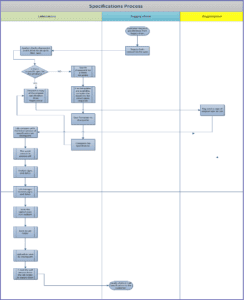
Clean, accessible, audited
The redesigned specifications library delivered immediate and measurable improvements:
- 50% reduction in specification handling work. The clearly defined process with no data duplication halved the effort required to manage specifications.
- Direct departmental access. Supply Chain and Registration can now access and email specifications directly from the SharePoint site — no more waiting for someone in the lab to send them.
- Request system integrated with Outlook. A request box on the site links directly to recipients’ email, creating a clear audit trail for specification requests.
- Comprehensive work instructions. The specification management process is now fully documented — clear, concise and available to all.
- Regular auditing. The SharePoint Lab Administrator audits the library and monitors request turnaround times to ensure the process continues to run smoothly.
Learnings
- Getting the problem statement correct at the start is essential — without a precise definition, the project drifts.
- All relevant people must be included — the Kaizen event was extremely helpful because it brought together three departments that had never jointly discussed specification management.
- Communication throughout the project prevents misalignment — what seems obvious to one person may not be to another.
- Adhering to the implementation plan can be challenging when relying on others — realistic timeframes and management support are crucial.
- Gathering information and interpreting it correctly is key — data drove the decisions, not assumptions.
- The 8-Step methodology worked very well for the successful completion of this project.
Structure eliminates risk and saves time
For a crop protection manufacturer, sending the wrong specification to a customer isn’t just an inconvenience — it’s a quality and compliance risk. This project eliminated that risk while simultaneously halving the work involved in managing specifications. The combination of a well-structured SharePoint library, clear responsibilities, and regular auditing creates a system that’s both more efficient and more reliable.
LeanTeams has worked with Barclay Chemicals since 2016. You may also be interested in: Case Study 1 – Preventive Maintenance. All our case studies are available here.
Lean tools applied in this case study
Get results like Barclay Chemicals
Our Lean training programmes help businesses across Ireland reduce waste, improve processes, and build a culture of continuous improvement.
More Case Studies
Explore our manufacturing case studies or view our training programmes.