
NO TIME TO WASTE · ISSUE 33
Why the best companies treasure their defects
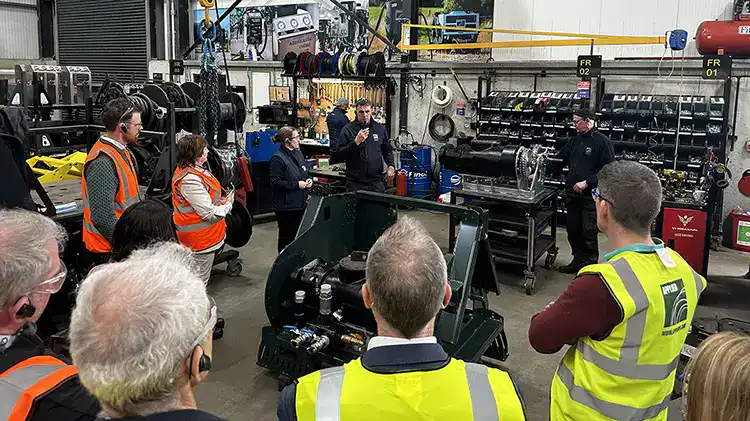
I was delighted to get the opportunity to visit Applied Concepts in Birr this week. This is a small engineering company owned by Mark Clendennen, who were struggling a few years ago.
Mark signed Kevin Brady, hoping to bring his no-nonsense hurling captaincy experience into his company. Off the pitch, Kevin is a thoughtful design engineer with a keen appreciation for the hidden talents of the team around him.
Moving from design engineering to production management, Kevin research the role and discovered Paul Akers and has been applying 2-second Lean ever since.
One of the many nuggets that Kevin shared with the visiting group – when something goes wrong — a defect, a mistake, a process that didn’t hold — they don’t bury it. They treat it as treasure.
It resonated with me as I often ask people to refect on a sport they might take part in. Do you learn more from an easy win or a narrow defeat?
THE BIG IDEA
Every Defect Is a Process Asking for Attention
In most organisations, a defect is embarrassing. Something to be corrected quickly, quietly, and preferably without anyone noticing.
The culture at Applied Concepts — and at every world-class Lean organisation I’ve worked with — is the opposite. A defect isn’t an embarrassment. It’s a gift. The process telling you, in the clearest possible language, exactly where your next improvement is hiding.
The distinction matters because it changes what you do with the defect. Bury it, and the cause stays buried with it. Treat it as treasure, and you inherit a precise map to your next improvement.
Shigeo Shingo built his life’s work on this idea — that defects are the inevitable output of imperfect processes, but the processes themselves are never as fixed as we think.
“You don’t learn from success; mistakes are what shape us. We treasure mistakes.”.”
— Jim Press · former President, Toyota Motor North America (in David Magee, How Toyota Became #1, Portfolio, 2008)
IN PRACTICE
The language matters, too. “Defect” sounds clinical and final. “Treasure” sounds valuable and worth digging for.
The vocabulary a team uses about its own mistakes shapes whether those mistakes get surfaced or hidden.
When leaders react to bad news with blame, the next bad news arrives slower — or doesn’t arrive at all.
When leaders react with curiosity, the next issue surfaces faster and smaller.
That’s not soft. It’s the opposite. Speed of problem surfacing is the single biggest predictor of how quickly an organisation can improve.
In organisations that take this seriously, the visible marker isn’t a slogan on the wall. It’s what happens when something goes wrong.
Defects are kept, labelled, and discussed — not disappeared. Each one is treated as a case study for the next improvement, not as a mark against the person involved.
Walk the floor and you’ll see defect bins that are tidy, transparent, and clearly owned. That’s a deliberate choice: it tells every person who walks past that surfacing a problem is the expected behaviour, not the risky one.
Three things tend to travel together in cultures like this:
- Blame is decoupled from problems. The question is always “what happened in the process?” not “who did this?”
- Defects are inspected, not just discarded. Each one is asked to surrender what it knows before it’s removed.
- The loop from defect → learning → change is short and visible. Everyone on the floor can see what was found, what was learned, and what changed.
TRY THIS WEEK
Three Ways to Start Treasuring Your Defects
Keep one defect visible. Instead of discarding the next defective part or failed order, leave it out. Label it with what happened, what was learned, and what changed. Let the team see the full loop.
“Mistakes are inevitable, but the defects that arise from them are not”
— Shigeo Shingo, pioneer of Zero Quality Control and Poka-Yoke
Shingo’s point sits at the heart of this. Mistakes are a fact of life — any process run by humans will occasionally produce one.
But whether those mistakes become defects that reach the customer, or become improvements that strengthen the process, is a matter of culture.
What Kevin Brady’s team at Applied Concepts have built is the foundation on which every other improvement sits: a place where defects are welcomed as the teachers they actually are.
UPCOMING PROGRAMMES & EVENTS
New to Lean? Learn the principles and basic tools on our one day training experience. See how a process can be transformed with the application of Lean Thinking.
Apply Lean thinking in 12 weeks. Start with our Lean Business Simulation training held regularly in Dublin.
A full day of high-quality content, bookended by exclusive Lean Practice Days at Toyota UK’s Burnaston and Deeside plants. Learn and apply the Lean Transformation Framework (LTF) Diagnostic.
At LeanTeams we help Irish businesses build the habits behind world-class quality — including the culture of surfacing problems fast and treating every defect as a teacher. If this week’s issue raises something you’d like to talk through, I’d be glad to help.